Why Relaxation Alone Won't Cut It: The Vagus Nerve Needs Two Signals at Once
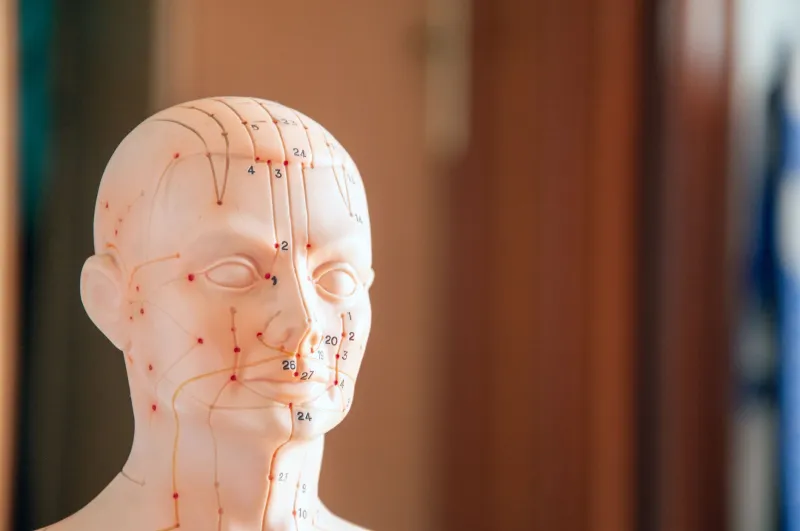
The Relaxation That Never Quite Lands
You've done the deep breathing. You've tried the guided meditations, the hot baths, the magnesium supplements. Maybe you've even booked regular massages. And yet — somewhere between the appointment and your drive home — that deep, bone-level calm slips away before you've even merged onto the highway.
You're not imagining it. And you're not doing relaxation wrong.
What's actually happening has a lot to do with a nerve most people have never heard of, and a biological paradox that explains why so many wellness strategies feel like they're almost working.
Meet the Vagus Nerve — Your Body's Calm Switch
The vagus nerve is the longest cranial nerve in the human body. It runs from your brainstem all the way down through your neck, chest, and abdomen, touching nearly every major organ along the way — your heart, your lungs, your gut. Think of it as the main highway of your parasympathetic nervous system, the system responsible for that rest-and-digest state your body desperately needs more of.
When your vagus nerve is well-toned and responsive, it acts like a skilled conductor — slowing your heart rate, lowering cortisol, reducing inflammation, and signaling your muscles to stop bracing for impact. When it's underactive or dysregulated, none of those things happen reliably. You might feel temporarily distracted from stress, but you don't actually move through it.
Here's the paradox: your vagus nerve is simultaneously incredibly powerful and surprisingly picky about what activates it.
Why One Signal Isn't Enough
Conventional massage works through mechanoreceptors in the skin and fascia — pressure-sensitive cells that send signals up through the spinal cord and eventually reach the brain. Good massage absolutely reduces muscle tension and can lower cortisol levels. Research published in journals like the International Journal of Neuroscience has confirmed this for decades.
Sound therapy, on the other hand, works through a completely different pathway. Specific frequencies — particularly those in the lower ranges used in therapeutic sound work — travel through the auditory nerve and activate regions of the brain associated with emotional regulation and autonomic control. Some frequencies appear to directly stimulate vagal tone through a mechanism called auricular vagus nerve stimulation, essentially vibrating the ear canal in ways that send a parasympathetic signal straight to the brainstem.
Both pathways are real. Both have research behind them. But here's what's emerging from newer neurological studies: when your nervous system is in a high-alert state — which, for most Americans living through relentless work pressure, financial stress, and a post-pandemic world that never quite settled — a single-channel input often isn't strong enough to override the sympathetic nervous system's grip.
Your brain, in a sense, doesn't fully believe one signal. It needs confirmation.
The Dual-Sensory Trigger
This is where synchronized sound-and-touch therapy becomes genuinely interesting from a neuroscience perspective.
When therapeutic touch and carefully calibrated sound frequencies are delivered simultaneously — not sequentially, but at the same time — the brain receives two independent streams of parasympathetic input at once. Researchers studying polyvagal theory, the framework developed by neuroscientist Dr. Stephen Porges, describe this as creating a stronger, more credible safety signal for the nervous system.
Polyvagal theory explains that your nervous system is constantly scanning the environment for cues of safety or danger — a process Porges calls neuroception. When you're chronically stressed, your neuroception is essentially miscalibrated. It keeps flagging threats even when you're objectively safe. A single relaxation signal — a massage, a meditation track — can be overridden by that miscalibration. But dual-sensory input through both the auditory and somatosensory channels simultaneously appears to create a more compelling case for safety that the nervous system is less likely to dismiss.
In practical terms, this is why people who experience sound-integrated massage often describe the sensation differently than standard massage. Phrases like "I actually let go this time" or "I didn't realize how tightly I was holding on until it was gone" aren't just marketing language. They're describing a neurological shift that's qualitatively different from surface-level relaxation.
The Pressure Point Connection
It gets more specific than that, too. Certain massage pressure points have well-documented connections to vagal activation. The area behind the ear (mastoid region), the base of the skull, the sternum, and specific points along the neck and upper thoracic spine all sit along or adjacent to vagal pathways. When a skilled therapist works these areas with intentional pressure while the client is simultaneously receiving low-frequency sound — whether through ambient speakers, tuning forks, or sound bowls — the convergence of signals at the brainstem level appears to amplify the parasympathetic response.
Emerging research from institutions studying integrative medicine suggests this isn't coincidence. The timing matters. The synchronization matters. A sound bath followed by a massage isn't the same neurological experience as sound delivered during targeted manual therapy.
What This Means for Chronic Stress
For people dealing with long-term stress — the kind that's been running in the background for years, not just a rough week at work — this dual-signal approach addresses something that isolated techniques often can't: a nervous system that has essentially learned to stay on guard.
Chronic sympathetic activation changes the sensitivity of vagal circuits over time. The body becomes less responsive to single-channel calming inputs because it's been conditioned to override them. This is why so many people find that massage feels great in the moment but doesn't seem to produce lasting change, or why meditation works in the studio but evaporates the second real life resumes.
By engaging two separate sensory channels simultaneously, sound-integrated massage therapy creates a more robust neurological reset — one that has a better chance of recalibrating vagal tone in a lasting way rather than just temporarily suppressing the stress response.
The Takeaway
Your body isn't broken. Your relaxation strategies aren't necessarily wrong. But if you've been treating stress like a single-input problem, it's worth understanding that your vagus nerve is waiting for a more complete signal.
Sound and touch, working together in real time, may be the combination your nervous system has been waiting for all along — not as a luxury, but as a genuine biological need.
At Healing Melody Massage, this is exactly the intersection we work from. Where sound meets touch, the nervous system finally gets the message it's been waiting to receive.